I Won $233 Million In The Lottery And Told No One — Only My Grandson – usnews
 Three weeks after quietly winning $233 million in the Mega Millions lottery, Sandra Williams, a 67-year-old widow from Ohio, decided she was going to teach her family a lesson. Sandra had lived a life of hard work and sacrifice, raising her children, Derek and Ashley, on her own after her husband passed away. She spent years working double shifts at Miller’s Diner, serving coffee and saving every penny to put her children through college. She paid for their first cars and silently cleared their debts, all while her own needs took a backseat.
But as time went on, Sandra began to notice a change in her children. What was once love and gratitude had twisted into a sense of entitlement. Derek, now a bank manager, treated her calls with the formality of a stranger with poor credit. Ashley, with her glass of wine, joked about inheritance at family gatherings, seemingly ignoring the tireless sacrifices that built the foundation of her life.
Feeling overlooked and undervalued by her own flesh and blood, Sandra devised a test. She called Derek and Ashley to say she was struggling with medication costs, aware that her heart medication was a sensitive topic that would test their compassion. Derek’s response was a managerial dismissal, suggesting she needed to live within her means before hanging up. Ashley’s reply was a brief text, advising her to handle it herself—no offer to help, no concern for her wellbeing.
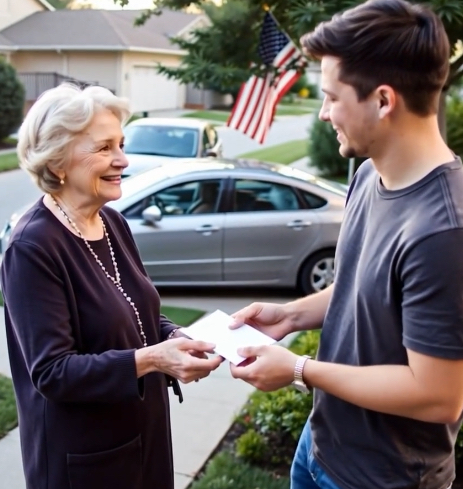
In stark contrast, her 20-year-old grandson, Jake, called almost immediately. “Grandma, are you okay? How much do you need?” he asked, ready to drive 200 miles with his last $300 to be by her side. His gesture was simple but powerful, demonstrating a depth of love and selflessness that had been missing from her own children. Jake’s actions reminded Sandra of the true essence of family—unconditional love and support.
Sandra knew that she could no longer ignore the disparity in her family’s dynamics. She needed to teach her children a lesson about compassion and entitlement. The next morning, she purchased a brand-new silver Honda Civic for Jake, a token of gratitude for his kindness. When Derek and Ashley arrived, their shock at her sudden apparent prosperity was evident. Their questions about how she afforded such a purchase were met with a cool, composed response. “I decided to skip my medication this month. Turns out generosity does wonders for the heart,” Sandra said, her words a pointed reminder of the compassion they failed to show.
What Derek and Ashley didn’t know was that Sandra had already consulted lawyers. She had redirected her legacy, creating trusts that reflected the love and gratitude she felt for Jake. Each cold word and dismissive gesture from her children was documented, serving as evidence of their lack of compassion.
Sandra’s revelation about her lottery win would eventually come, but by then, it would be too late for Derek and Ashley to undo the damage. Her newfound wealth was no longer about the money—it was about redefining what family meant to her. Sandra’s legacy would be a lesson: that love must be accompanied by compassion, or it is nothing more than entitlement masquerading as family bonds.
In reshaping her will, Sandra didn’t just change her descendants’ financial future; she redefined the values she wanted to leave behind. She taught her family that true wealth is measured not in dollars, but in the love and kindness shared amongst each other. And with that, Sandra ensured that, even in her absence, her values would live on, carried forward by those who truly understood what it meant to be family.